
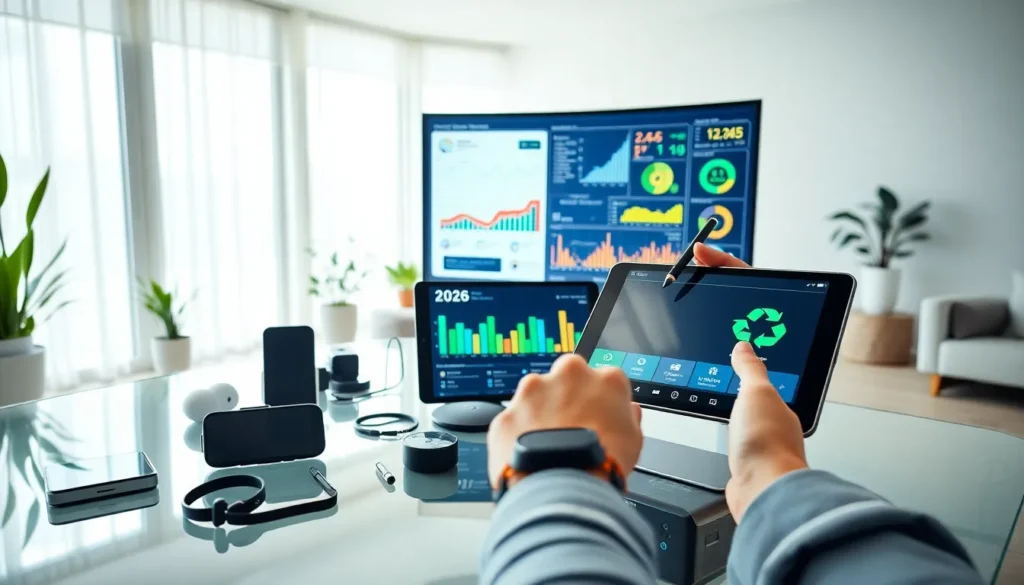

Gadget reviews trends 2026 will reshape how consumers discover and evaluate technology products. The tech review industry is evolving fast, driven by artificial intelligence, sustainability concerns, and changing audience preferences. Readers now expect more than written specs and star ratings. They want video demonstrations, verified testing data, and honest assessments of environmental impact. This shift affects everything from smartphones to smart home devices. Understanding these gadget reviews trends helps both consumers and creators stay ahead. Here’s what the tech coverage landscape will look like in 2026.
Table of Contents
ToggleKey Takeaways
- Gadget reviews trends 2026 will prioritize AI-powered analysis, aggregating feedback from thousands of users for more balanced and data-driven assessments.
- Sustainability is becoming a core evaluation criterion, with reviewers scoring products on repairability, recycled materials, and software update longevity.
- Video-first content on YouTube, TikTok, and Instagram Reels now leads gadget discovery, making short-form and interactive formats essential for reaching consumers.
- Wearables and health tech are the fastest-growing review categories, requiring rigorous accuracy testing and clear privacy disclosures.
- Consumer trust depends on transparency—expect stricter disclosure requirements, verified purchase programs, and long-term testing to become standard in credible gadget reviews.
- Younger audiences increasingly value device longevity over cutting-edge specs, reshaping how reviewers define product value.
The Rise of AI-Powered Review Analysis
AI tools are changing how reviewers create and consumers digest gadget reviews trends 2026 will amplify. Machine learning algorithms now process thousands of user comments, benchmark scores, and real-world performance data in seconds. This gives reviewers deeper insights than manual research ever could.
Several major tech publications already use AI to aggregate sentiment from social media and retail platforms. The result? More balanced perspectives that account for diverse user experiences. A single reviewer’s opinion matters less when AI can synthesize feedback from 50,000 actual owners.
AI also helps identify patterns humans miss. Battery degradation over six months, software bugs affecting specific use cases, and regional performance differences all surface faster. Gadget reviews in 2026 will feature these AI-generated insights as standard practice.
But there’s a catch. Readers want to know when AI contributes to a review. Transparency about methodology builds trust. The best gadget reviews trends show publications clearly labeling AI-assisted analysis while maintaining human editorial oversight.
Expect AI comparison tools to become common. Consumers will input their priorities, camera quality, battery life, price range, and receive personalized gadget recommendations based on aggregated review data. This makes the gadget reviews process more interactive and useful.
Sustainability and Eco-Friendly Tech Takes Center Stage
Environmental impact now influences purchasing decisions. Gadget reviews trends 2026 reflect this shift by making sustainability a core evaluation criterion alongside performance and price.
Reviewers are scoring products on repairability, recycled material usage, and carbon footprint. iFixit-style teardowns have become standard content. Consumers want to know: Can they replace the battery? Will the manufacturer accept the device for recycling? How long will software updates continue?
Right-to-repair legislation in the EU and several US states has pushed manufacturers toward modular designs. Gadget reviews now highlight these features prominently. A phone with a user-replaceable battery gets bonus points. A laptop with soldered RAM loses them.
Packaging matters too. Excessive plastic, unnecessary accessories, and oversized boxes draw criticism in 2026 gadget reviews. Some publications have introduced “eco scores” that sit alongside traditional performance ratings.
Brands are responding. Apple, Samsung, and Google have all expanded their sustainability reporting. Reviewers cross-reference these claims with independent testing. Greenwashing gets called out. Genuine efforts earn praise.
Gadget reviews trends show younger consumers prioritizing longevity over cutting-edge specs. A device that lasts five years beats one that’s obsolete in two. This perspective is reshaping how reviewers frame value propositions.
Immersive Hands-On Formats and Video-First Reviews
Written gadget reviews aren’t disappearing, but video content now leads. Gadget reviews trends 2026 show YouTube, TikTok, and Instagram Reels as primary discovery channels for tech products.
Short-form content dominates initial impressions. A 60-second TikTok showing a phone’s camera in action reaches millions before any traditional review publishes. Long-form YouTube videos then provide depth for serious buyers researching gadget reviews.
Interactive elements are expanding. Some reviewers offer AR experiences where viewers can “see” a gadget in their own space through their phone camera. 360-degree product views let audiences examine devices from every angle.
Live streaming adds another dimension. Real-time unboxings and Q&A sessions let viewers ask specific questions about gadget reviews as they happen. This format builds community and trust simultaneously.
Production quality expectations have risen. Consumers expect professional lighting, clear audio, and thoughtful editing. Amateur-looking content struggles to compete unless it offers unique insights or personality.
Gadget reviews trends also show podcasts gaining ground for in-depth tech discussion. Audio formats work well for commuters and multitaskers who want analysis without watching a screen. The most successful reviewers now publish across multiple formats, video, audio, and written, to reach different audiences.
Wearables and Health Tech Dominate Review Categories
Smartwatches, fitness trackers, and health monitors generate massive reader interest. Gadget reviews trends 2026 show wearables as the fastest-growing review category across major tech publications.
The appeal is personal. Unlike a laptop or TV, wearables track intimate data, heart rate, sleep patterns, blood oxygen, and stress levels. Consumers need trustworthy gadget reviews before strapping something to their body.
Accuracy testing has become sophisticated. Reviewers compare wearable readings against medical-grade equipment. A fitness tracker that overcounts steps or miscalculates calories loses credibility fast. Gadget reviews now include methodology sections explaining how accuracy claims were verified.
New health features drive coverage. Continuous glucose monitoring, blood pressure tracking, and AFib detection are moving from medical devices to consumer wearables. Reviewers must balance enthusiasm with responsible health communication. They’re not doctors, and gadget reviews shouldn’t substitute for medical advice.
Battery life matters more for wearables than almost any other category. A watch that needs daily charging frustrates users. Gadget reviews trends show extended battery testing, real-world usage over weeks, not hours, becoming standard.
Privacy concerns also feature prominently. Who owns the health data? Where is it stored? Can it be sold? The best gadget reviews address these questions directly. Consumers are increasingly wary of trading biometric information for convenience.
Consumer Trust and Transparency in Reviews
Fake reviews and undisclosed sponsorships have eroded trust. Gadget reviews trends 2026 show publications working harder to prove their independence and credibility.
Disclosure requirements are tightening. The FTC has increased enforcement against undisclosed paid partnerships. Ethical gadget reviews now clearly state when a product was provided for free, when affiliate links are used, and when any financial relationship exists with the manufacturer.
Verified purchase programs help. Amazon and other retailers highlight reviews from confirmed buyers. Independent publications are adopting similar verification systems. Readers can see whether a reviewer actually bought and used the product long-term.
Community fact-checking adds accountability. Comment sections and social media allow readers to challenge claims in gadget reviews. Reviewers who make errors, or worse, mislead, face immediate public correction. This dynamic keeps content honest.
Long-term testing builds credibility. A review written after three days with a device differs from one written after three months. Gadget reviews trends show audiences valuing “revisit” content that updates initial impressions based on extended use.
Some publications now publish their testing methodologies publicly. Readers can see exactly how benchmark scores were generated and what conditions were used. This transparency separates serious gadget reviews from superficial coverage.


